








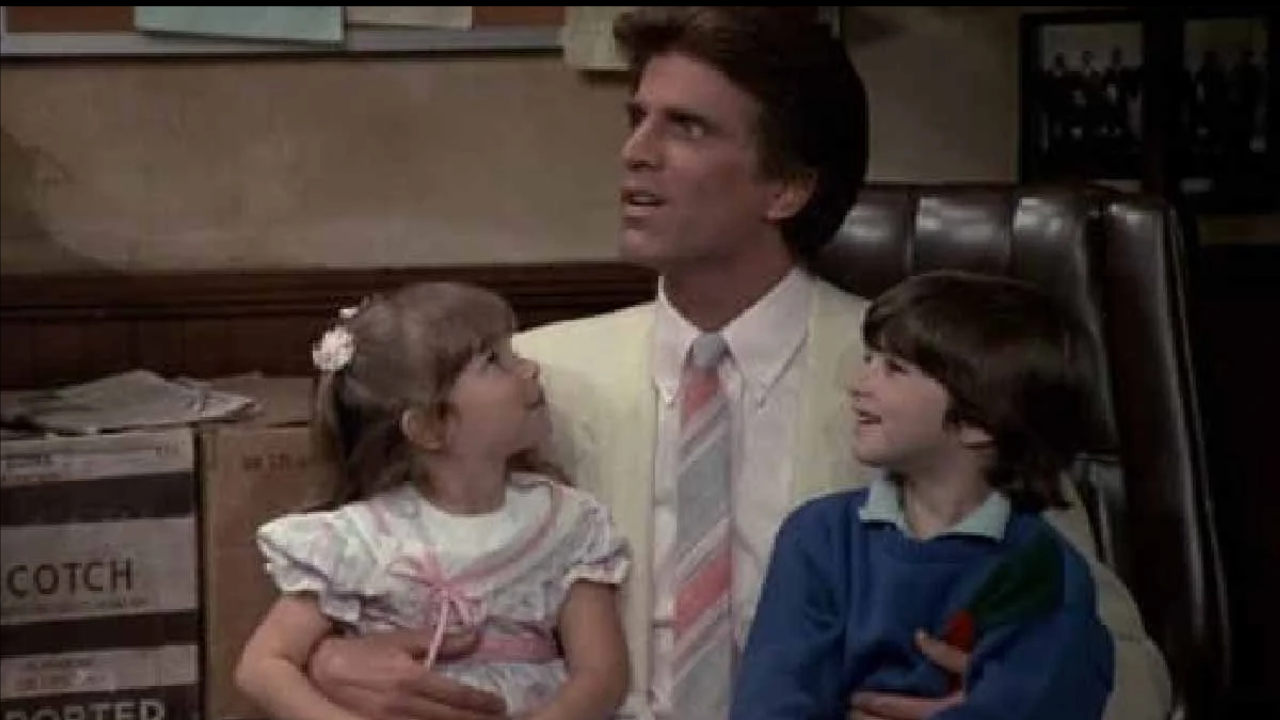
When people talk about Judith Barsi, they talk about a little girl who lit up every screen she appeared on. They talk about the voice of Ducky in The Land Before Time, the kid from Jaws: The Revenge, the child who somehow carried an adult weight of charm without anyone noticing what was happening behind closed doors. But there’s another name in this story that almost never gets mentioned — Barna Barsi, Judith’s older half-brother, a man whose life was just as shaped by the same darkness that eventually consumed his family.
Not as a footnote, not as a side character — but as a person who lived through something no child should ever have to, and whose story deserves to be told with the same care we give to his sister’s.
Quick Bio Table – Barna Barsi at a Glance
| Detail | Info |
| Full Name | Barna Barsi |
| Born | 1957 |
| Died | 1995 |
| Age at Death | Around 37–38 years old |
| Nationality | American (Hungarian descent) |
| Ethnicity | Hungarian-American |
| Father | József Barsi |
| Mother | Not publicly documented |
| Half-Sister | Judith Eva Barsi (1978–1988) |
| Stepmother | Maria Barsi (Judith’s mother) |
| Height | Not publicly documented |
| Net Worth | Not publicly documented |
| Occupation | Not publicly known |
| Known For | Being the half-brother of child actress Judith Barsi |
| Cause of Death | Not publicly documented |
| Burial | FindAGrave lists his memorial (ID: 135623813) |
Who Was Barna Barsi?
Barna Barsi was born in 1957, making him roughly 21 years older than his half-sister Judith, who came into the world in 1978. He was the son of József Barsi — the same man who would later become one of the most villainized figures in Hollywood true crime history. József was a Hungarian immigrant who came to the United States chasing a better life, eventually settling in California with his second wife, Maria, and their daughter Judith.
Barna was from an earlier chapter of József’s life. He was the elder child, already grown by the time little Judith was lighting up television screens and booking commercials at age six. The details of Barna’s early life are sparse — his mother’s identity has never been publicly confirmed, and records about his childhood are thin. What is known is that he shared a father with Judith, and that father was a man defined by jealousy, rage, and a need for control that destroyed everything he touched.
The Shadow That Was József Barsi
You cannot understand Barna’s story without understanding their father. József Barsi was, by all accounts and extensive documentation, a deeply abusive man. He had grown up in Hungary before emigrating, and by the time he was raising Judith in the United States, he had developed a pattern of threatening behavior that terrorized his household on a daily basis.
He controlled Maria with fear, threatened to disfigure Judith so no one would hire her, and made the family’s home feel more like a prison than a place of warmth. Neighbors noticed. Teachers noticed. Judith’s co-stars and their parents noticed. But in the 1980s, child protective systems were not nearly as responsive as advocates would have hoped, and report after report went without meaningful intervention.
What József did to his immediate family — Maria and Judith — is extensively documented. What he did to Barna, or what kind of father he was during Barna’s childhood years, is far less clear. But given everything we know about József’s character, it would be naive to assume that his older son emerged from that relationship unscathed.
Barna’s Existence in Judith’s World
Barna was a grown adult by the time Judith was a child star. The age gap between them — over two decades — meant they didn’t grow up side by side the way most siblings do. He was not part of the day-to-day household that Judith lived in with María and József. He existed on the periphery of the story that most people know.
There’s something quietly heartbreaking about that. Here was a man whose father was a monster, whose half-sister was one of the most beloved child actresses of her era, and whose own story essentially vanished into the background of a tragedy that consumed the entire Barsi family name.
Not much is known about what Barna did for a living, who he was close to, or how he processed the knowledge of what his father was doing to Judith and Maria. The public record on him is thin — a name on a genealogy site, a memorial on FindAGrave, a handful of references in true crime discussions that mention him mostly in passing.
July 1988 – When Everything Ended
On July 25, 1988, József Barsi shot and killed both Maria and Judith in their Canoga Park home, then set the house on fire before taking his own life three days later. Judith was just ten years old. She had completed her voice work for The Land Before Time and All Dogs Go to Heaven — both of which would release after her death, making her performances feel all the more haunting.
The murders shocked Hollywood. Friends of the family, co-stars, and fans were devastated. Judith had been such a vivid, joyful presence — on screen and reportedly in life — that the violence of her ending felt incomprehensible.
For Barna, this was not a Hollywood story. This was the murder of his little sister and stepmother at the hands of their shared father. Whatever complicated feelings he had about József, whatever history existed between them, it was suddenly over in the most brutal way imaginable.
Losing a sibling is devastating under any circumstances. Losing a sibling the way Barna lost Judith — to a murder-suicide carried out by a parent — is a grief that sits in a category of its own. There is no closure in that kind of loss. There are only questions, silence, and the weight of a name that the world associates with tragedy.
Life After the Murders
Barna lived for seven more years after Judith’s death, passing away in 1995 at approximately 37 or 38 years old. The cause of his death has not been publicly documented, and the circumstances of his final years remain largely unknown to the public.
What we do know is that he lived in a time before grief counseling was widely normalized, before trauma was openly discussed, and before the true crime community had turned his sister’s story into the subject of documentaries, Reddit threads, and YouTube videos. Whatever he processed about his father and sister, he processed it largely in private.
His FindAGrave memorial exists, but the page is sparse. There are no photographs attached, no lengthy biography, no tributes from dozens of people who knew him well. He slipped through the world quietly, and he left it quietly too.
Why Barna’s Story Matters
It’s easy to focus entirely on Judith when you engage with this story. She was the one with the career, the one whose voice became immortalized in beloved animated films, the one whose photographs you can find — a bright-eyed little girl with an enormous smile. The injustice done to her is obvious and undeniable.
But Barna’s story matters for different reasons.
He is a reminder that abuse doesn’t only damage the people who live under the same roof as the abuser. It ripples outward — to extended family, to half-siblings, to people who share blood with a monster and spend their lives quietly carrying that knowledge. Barna didn’t choose József as his father any more than Judith did. He was shaped by that connection whether he wanted to be or not.
He’s also a reminder that the public tends to only mourn the people it can see clearly. Judith was visible — she had a career, a public presence, a face people recognized. Barna had none of that. He was just a man connected to a famous tragedy, living and dying without much acknowledgment from the wider world.
That’s worth sitting with for a moment. Not every victim of a difficult family is famous. Not every person shaped by abuse gets a memoir or a documentary. Some people just live their lives, carry what they carry, and eventually leave without much fanfare. Barna Barsi was one of those people.
The Barsi Family Legacy
The name Barsi is today almost exclusively associated with tragedy. If you search it, you find Judith first — her career, her death, the documentaries about József’s abuse. You find María, the mother who tried to protect her daughter and paid for it with her life. You find József, held up as an example of how dangerously a controlling, jealous man can destroy the people closest to him.
Barna doesn’t come up often. He gets a line here and there in longer pieces. He gets a mention in genealogy databases and true crime forums. But he doesn’t get the full consideration of what it means to have lived as the older son of that particular man.
There’s something worth honoring in that gap — not by sensationalizing it, but by simply acknowledging it. He was a real person. He had a life. He lost his sister in the most violent way imaginable. He outlived her by seven years and then was gone himself, still relatively young, with most of his story untold.
Remembering Barna Barsi
The internet age has given Judith Barsi’s story a kind of immortality. Her voice lives on every time someone watches The Land Before Time or All Dogs Go to Heaven. Her face is in countless articles and videos. People who weren’t even born when she died know who she is.
Barna doesn’t have that. He was never famous, never public, and never had the kind of presence that gets preserved in the digital record. His existence is documented mostly through genealogy tools and the occasional true crime discussion that mentions he existed.
But he did exist. He was born in 1957 to a man who would later become notorious for the worst possible reasons. He had a little sister who brought joy to millions of people without those people knowing what her home life looked like. He watched that family fall apart from the outside, and then he watched it end in fire and violence. And then he lived with that for seven years before his own death in 1995.
That’s a life. It’s not a clean or well-documented life, and it’s not one that history has chosen to remember in detail. But it’s a life that deserves at least the acknowledgment that it happened, that it mattered, and that the ripples of what József Barsi did extended far beyond the three people who died in that Canoga Park home in July of 1988.
Barna Barsi wasn’t a footnote. He was a son, a half-brother, a person who shared DNA with both the victim and the perpetrator of one of Hollywood’s most heartbreaking true crime stories. And that alone is worth remembering.
Explore the latest entertainment news and reviews at NewsOrganization!